

A Little Wisdom Helps You Become Smarter !
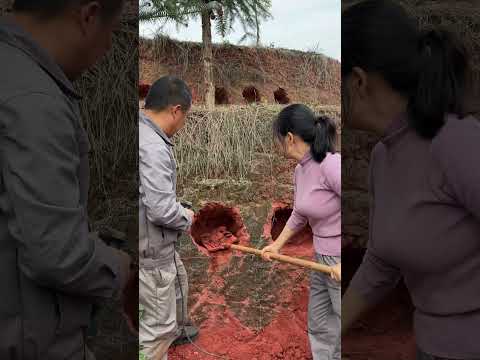
In this video, workers are digging neat, uniform earth caves on a compact red clay hillside. These hand-made caves are custom-built nests for free-range chickens, a very popular and practical eco-friendly farming method widely used in hilly areas of southern China.
Unlike traditional caged chicken farming or expensive wooden coop builds, this method lets chickens follow their natural burrowing instincts. They use these dark, enclosed caves as a quiet, safe space to rest, sleep and lay eggs. This greatly reduces stress in the flock, keeps egg production steady, and solves the common problem of eggs being laid randomly around the farm and getting dirty, lost or broken.
Core Advantages of This Cave Nest Farming Method
1. Stress-free, natural living environment: This method fits perfectly with chickens’ innate habit of seeking enclosed, hidden spaces to nest. Chickens are calmer, healthier, and have more consistent egg production.
2. Extremely low cost and long lifespan: There is no need to buy expensive chicken cages or build complex coop structures. All you need are simple tools and basic labor to build the nests. Once dug properly in solid soil, the caves can be used for many years with almost no maintenance costs.
3. Natural temperature control: The earth caves have a natural insulation effect. They stay cool in hot summer and warm in cold winter, with no need for extra heating or cooling equipment.
4. Better health for your flock: The sloped hillside has excellent natural drainage, so the caves stay dry even during rainy seasons. Good natural ventilation also prevents the growth of bacteria and mold, greatly reducing the risk of respiratory and intestinal diseases in chickens.
Critical Tips If You Want To Use This Method
If you plan to build these cave nests for your own chickens, follow these key rules to avoid mistakes and keep your flock safe:
1. Choose the right site first: Always pick a gently sloped hillside with solid, non-loose soil. Never dig on steep, unstable slopes that risk landslides. Avoid low-lying areas that flood easily, and make sure the site has good natural drainage.
2. Get the cave size and layout right: Dig each cave 30-40cm wide and 40-50cm deep, which is the perfect size for 1-2 chickens to nest comfortably. Keep at least 50cm of space between each cave, and use a level line to line them up in neat rows. This makes it easy to check on the chickens, collect eggs, and clean the nests.
3. Prevent water from entering the caves: Always dig the cave entrance slightly higher than the inner bottom of the cave. This stops rainwater from flowing into the nest and keeps the inside dry. You can also add a small overhang above the entrance to keep rain out.
4. Prioritize safety and structural stability: Check the cave walls regularly for loose soil, and fix any damage right away to prevent collapse. Never dig caves too close to each other vertically or horizontally, as this can weaken the hillside structure.
5. Keep up with regular hygiene and maintenance: Clean the caves on a fixed schedule to remove chicken manure and old bedding. This prevents the growth of bacteria, parasites, and pests.
6. Protect your flock from predators: Add a small, removable wire fence or cover at the cave entrance. This keeps out predators like snakes, weasels, and rats, while still letting chickens move in and out freely.